TP-Link EAP110-Outdoor V3, Omada N300 Wireless Outdoor
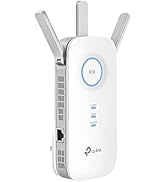
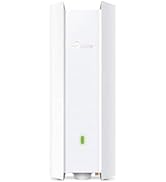
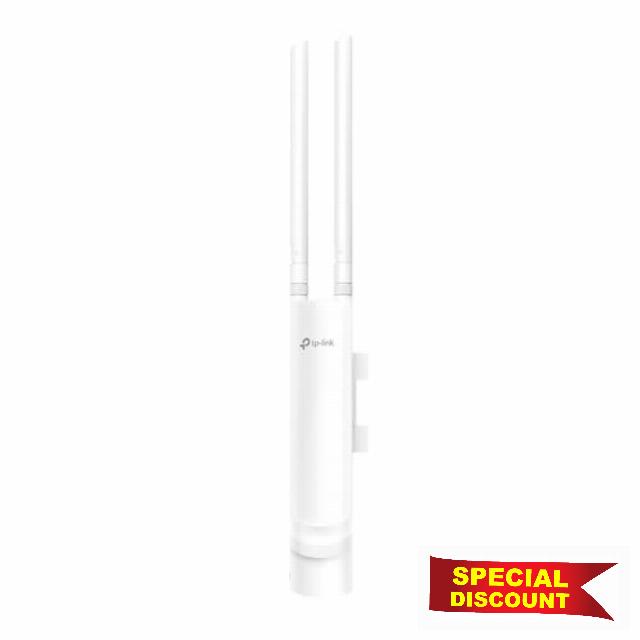
TP-Link EAP110-Outdoor V3, Omada N300 Wireless Outdoor Access Point, WiFi Coverage Up To 200 Meters, Passive PoE W/ Free PoE Injector, SDN Integrated, Cloud Access & Omada App, White
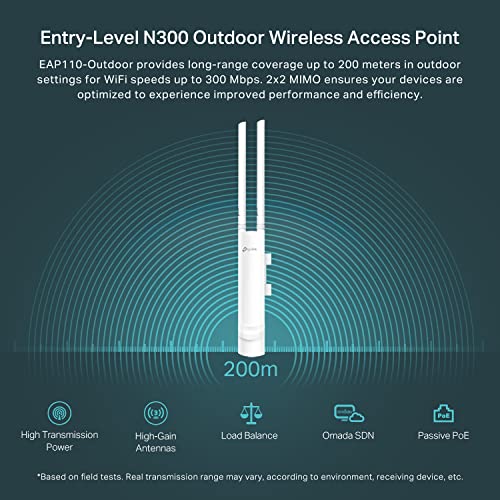
- Up to 300Mbps Wi-Fi with 2×2 MIMO technology ; Rate limit on per SSID to restrict the bandwidth of each client
- Built for outdoor Wi-Fi applications ; WPA/WPA2-enterprise, 802.1X with RADIUS secure authentication and rogue access point detection ensure the security of WLAN
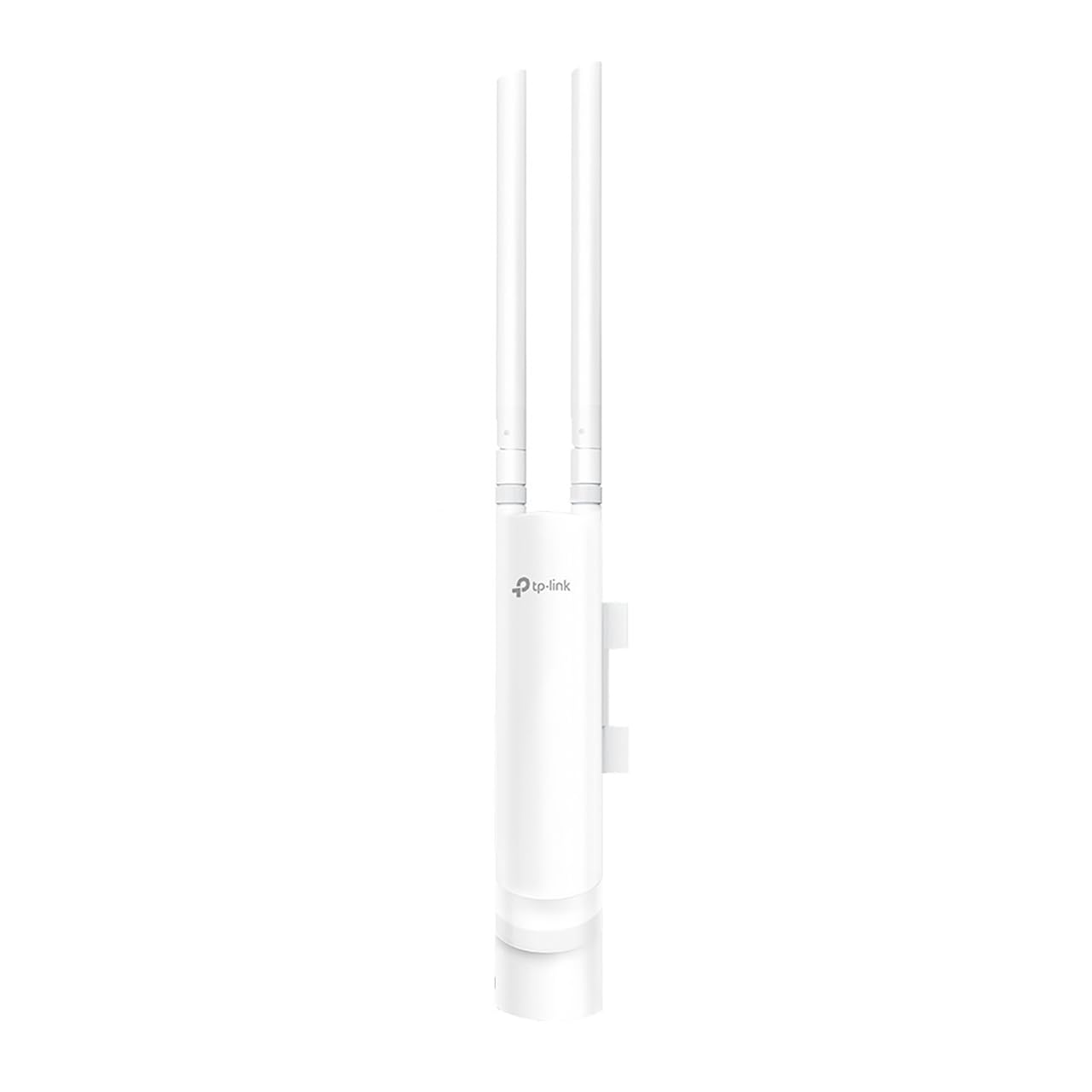
- High transmission power and high gain antennas provide a long-range coverage area
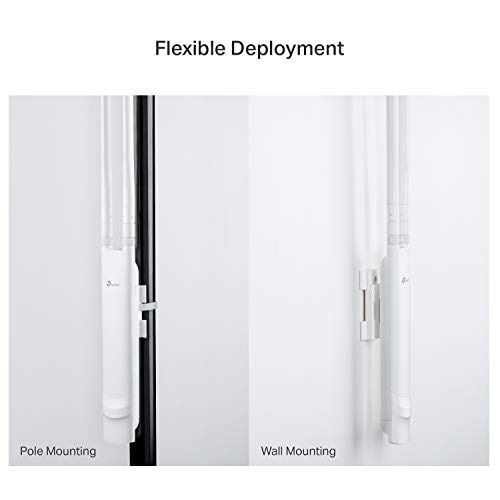
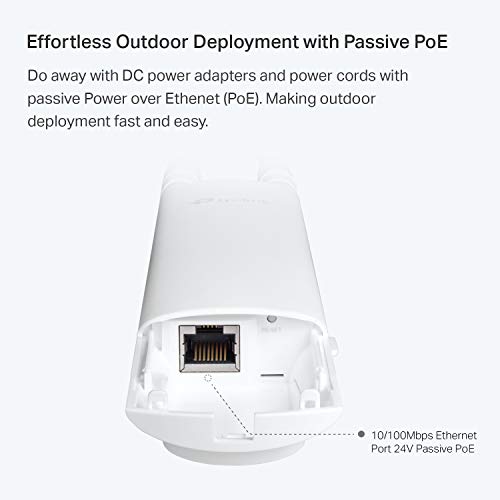
- Passive PoE Power over Ethernet support and simple mounting design allow for flexible deployment and convenient installation
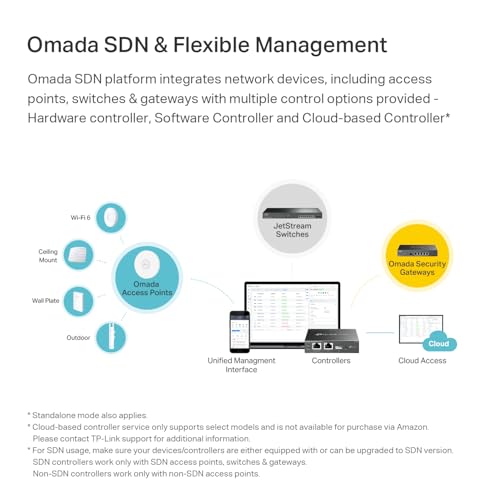
- Free Auranet Controller Software lets administrators easily manage hundreds of EAPs
From the brand
-
Wi-Fi 7 Mesh
-
Wi-Fi 7 Routers
-
Mesh Wi-Fi
-
Wi-Fi Routers
-
Access Points
-
Range Extenders
-
WiFi USB Adapters
-
PCIe Cards
-
Network Switches
-
USB BT + Ethernet
-
Festa Networking

| SKU: | B07CG3YRTR |
| Weight: | 0.26 Pounds |
| Dimensions: | 3.7"L x 1.7"W x 8.2"H |
| Brand: | TP-Link |
| Model: | EAP110-Outdoor V3 |
| Colour: | White |
| Manufacture: | TP-Link |
| Colour: | White |
From the brand


My ultimate goal is to put this outside near the edge of our property to get a signal where it is now very weak. Currently the mesh network inside our house barely reaches the device I have out there and so it drops off regularly.
Since it’s quite cold out, for the time being I’ve done some other testing. Set up is quick and straightforward. I had it configured and working in under 15 minutes. I hooked it up indoors, in my computer room a couple feet away from my primary mesh node. I plugged it directly in to my switch, just like the mesh node. I then ran speedtest from my phone, once with the mesh network and once with the EAP110. The results were shocking! The EAP was getting 50 Mbs while the mesh network was getting 40 Mbps.
I then went to different locations inside the house, in different rooms. We have two other mesh nodes in the house providing full coverage. To my phone, the signal from the EAP was as strong or stronger than the mesh signals in most locations.
Being extremely happy with these results, I moved the EAP into my garage, and pointed one of the antennas in the direction of the device with the weak signal I was ultimately trying to reach. Again, the signal strength was stronger than what it had been receiving from the closest indoor mesh node. This should be good enough until the weather gets warmer and I can move it outdoors closer to the device and set it up as I intended.
Also note, I’m using some bigger high gain antennas that I had.
Update 6/2/2025
So, after a year and a half, I finally moved it out of the garage to the outdoor location I had originally intended. I am even more impressed with it now, as the signal range I am getting across my ~4 acre property is astounding. If you have line of sight, you can go very far from it and still have a good signal and decent bandwidth. As you can see in my photos, the final location is atop my very old C-Band dish that I’ve repurposed as a huge monopod which has 2 Tapo cameras, an air quality monitor, and now the Omada Access Point. All of my cables, power, and network devices are in a weatherproof box buried at the base of the dish.
Since these are so inexpensive, I just purchased another to install on the other side of our property so we can be bathed with a strong wifi signal no matter where we are outdoors.
I couldn’t be more happy with this device. The bang for the buck is off the charts. I may need to buy a third one, just to keep as a spare.
First I tried WiFi extenders to get to WiFi cameras out by our barn, but signal was very iffy. I put this on a high point on one side of our home and now I can access wifi outside with good direct line of sight for about 150-250 feet. I can get spotty signals much further out, but things did improve by playing with the antennas and using a wifi strength app.
This is commercial grade, and has many features with the Omada system that I will never use. Basically you have an antenna that you run a ethernet cable to a PPOE plug in adapter and then out with another cable to the antenna. You can wire it pretty far out with cable so it does not have to be close to the powered adapter.
I think you can also run it as an unwired access point, but you still need power to it and I did not set up that way.
I have 2 of these running in my barn for the cameras, switches, fans, etc. They have worked flawlessly for years now. One is inside the barn (metal) and one outside. The speed isn’t fantastic, about 20 to 30 mb/s per client but that’s more than enough. Even though they have 100mb/s connections they still only get 20 to 30mb/s for most clients. My iPhone gets about 45mb/s. Yes, when the unit comes up unconfigured or factory reset, it will broadcast an open Wi-Fi access but that has never happened to me outside of initial configuration. The web interface setup is very flexible and easy to understand. For $40 each these worked outstanding. No, they are not the fastest on the market. The range is ok, The furthest camera is about 200 feet away and it works fine. I don’t use the Omada software, I just configured them standalone. One important point… you should segment these onto a different subnet. Noisy traffic on your home network can clobber the communications to the cameras and switches. I put a cheap router (Ubiquiti Edge Router X) between my home and barn networks because the cameras and switches (Alexa) were sluggish to respond. After the router was installed and everything switched to the new subnet, things responded snappy again. It turned out I had a noisy device on my home network but that’s a different story.
AP relay only
This is not a router, there is no DHCP server on this item. You need to connect it to a router for a network client to work properly. The WIFI relay component works great. I use the relay to control a raspberry pi robot/rover running outside my home from the 2nd floor of my house and I could get easily get 50 Meter of range for video, telemetry, video and control channels. This is a bandwidth intensive application. You can probably reach 100 Meter range for regular web surfing without obstruction. The Instructions are clear and the network setup is quite easy. All the physical hardware is functional and well built. Good product. As usual TP-Link provides good stuff a reasonable price. Thanks