MPPT Solar Charge Controller 100V/40A, 12V/24V Auto, LCD
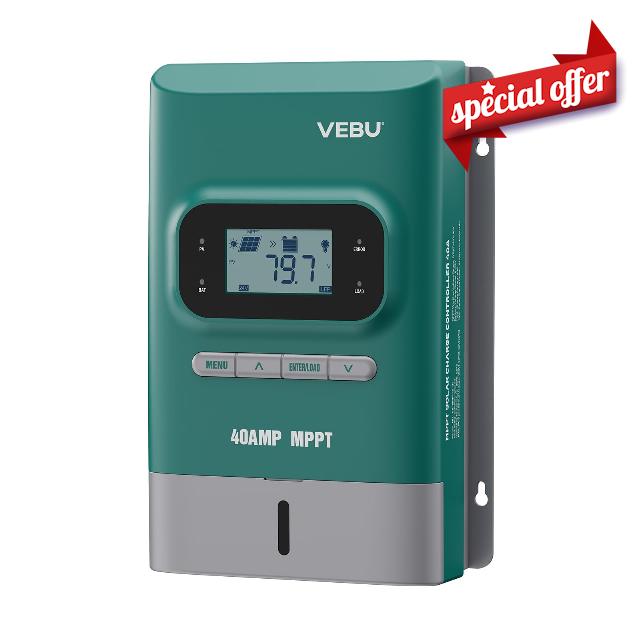
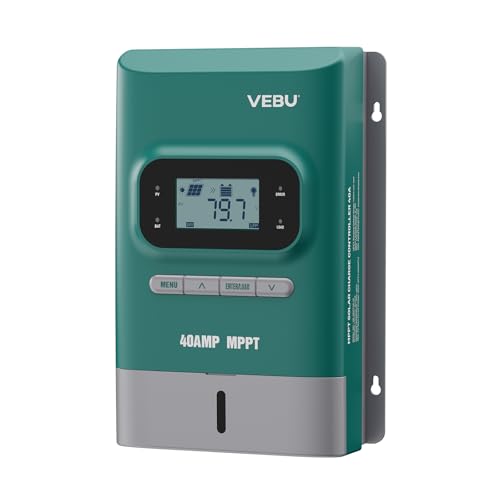
MPPT Solar Charge Controller 100V/40A, 12V/24V Auto, LCD Display, for Lithium & Lead-Acid Batteries, RV Marine Off-Grid
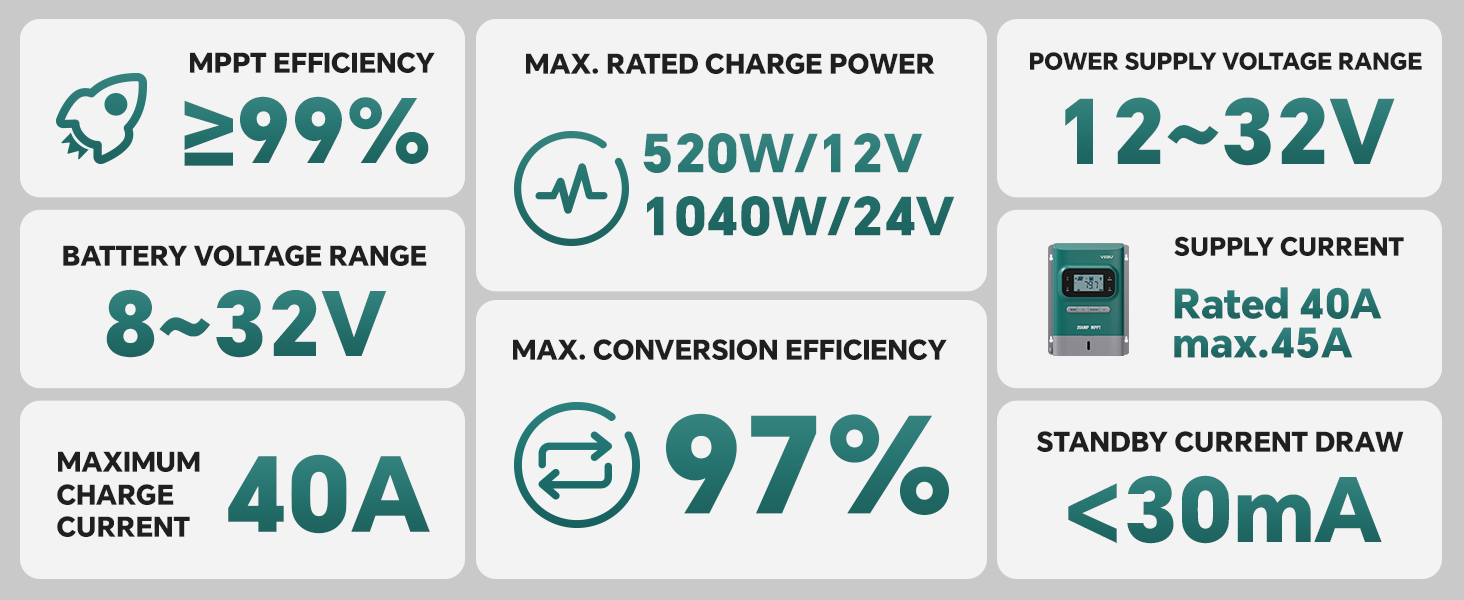
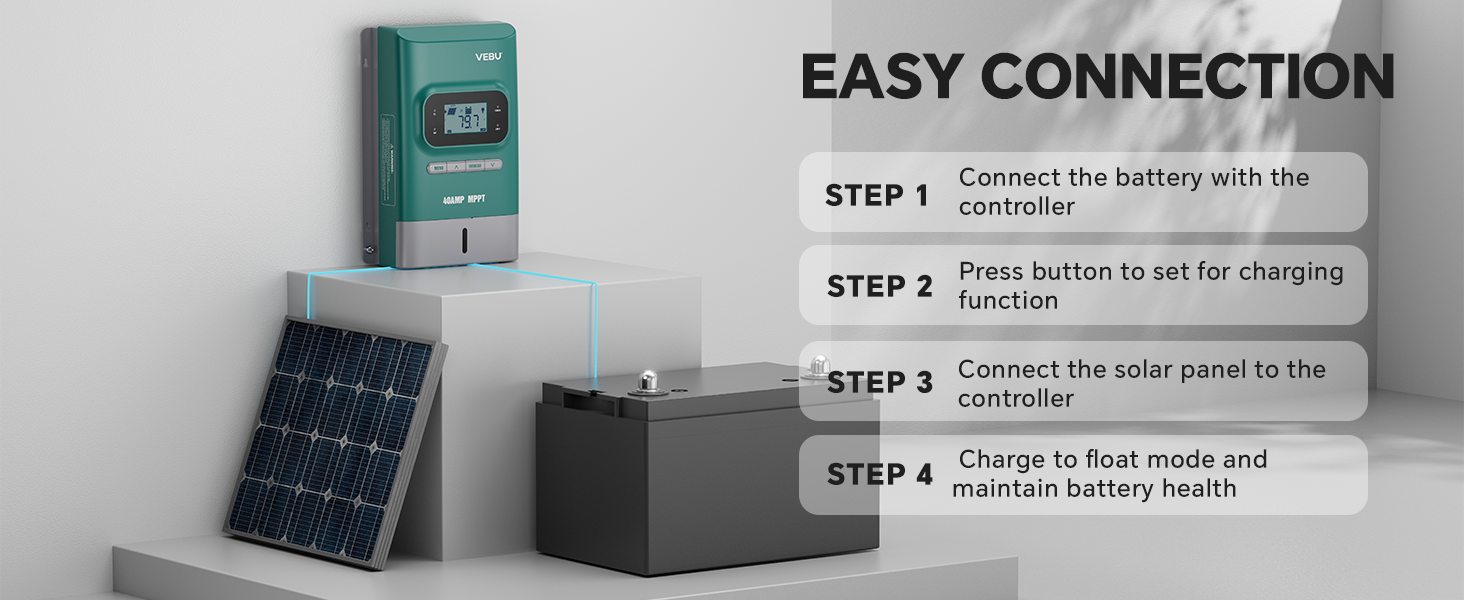
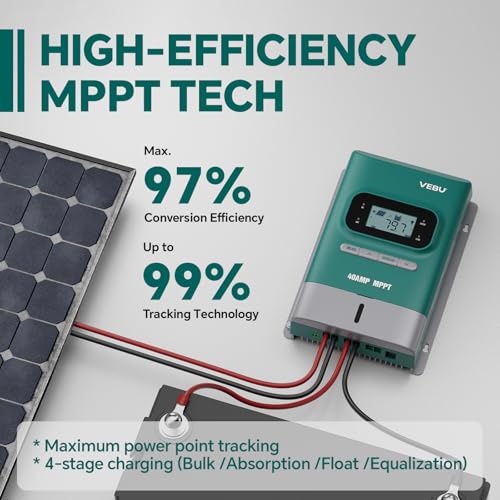
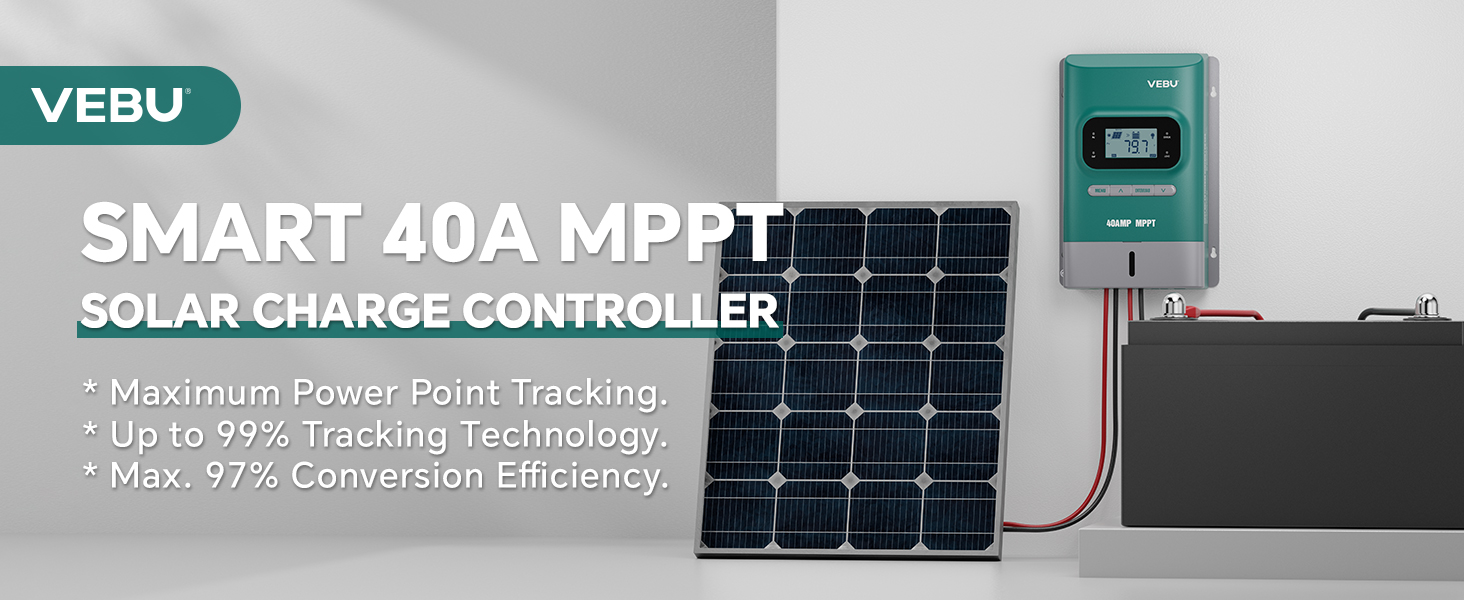
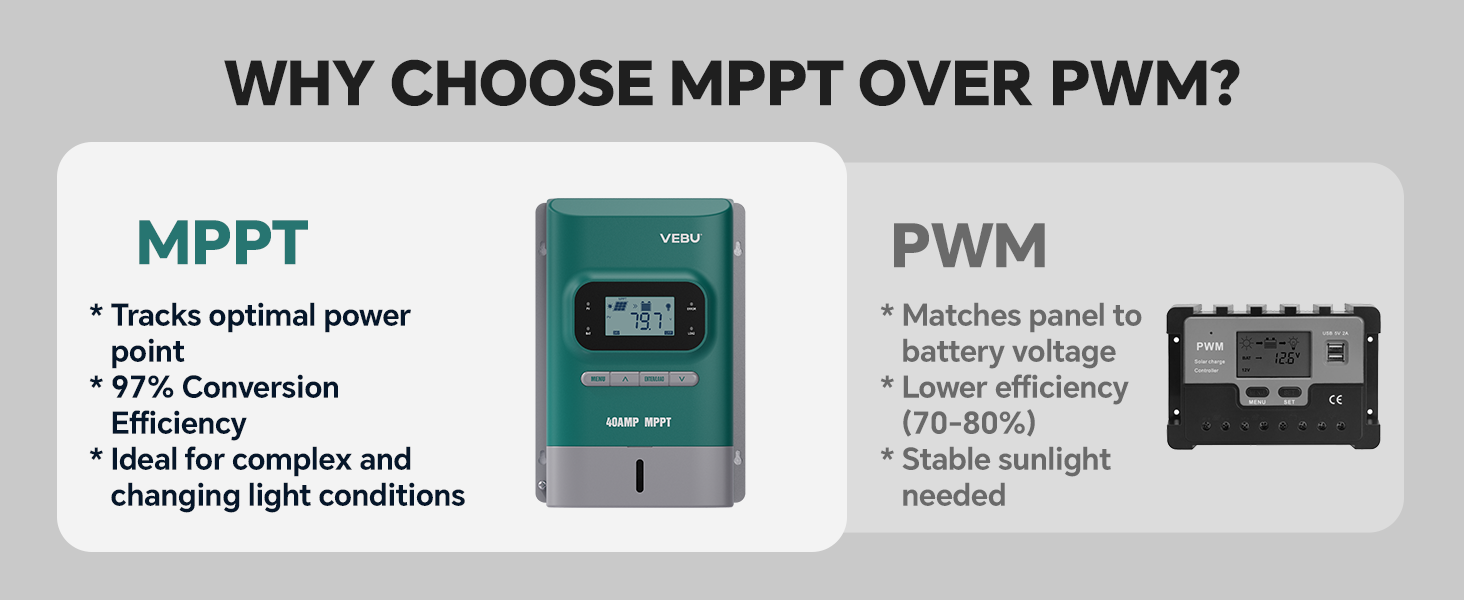
Maximize Solar Output with 99% MPPT Tracking: This advanced MPPT solar charger captures up to 30% more power than traditional PWM controllers – even in partial shade. With a 97% conversion efficiency, it charges 12V or 24V batteries faster, maximizing energy harvest from your solar panels
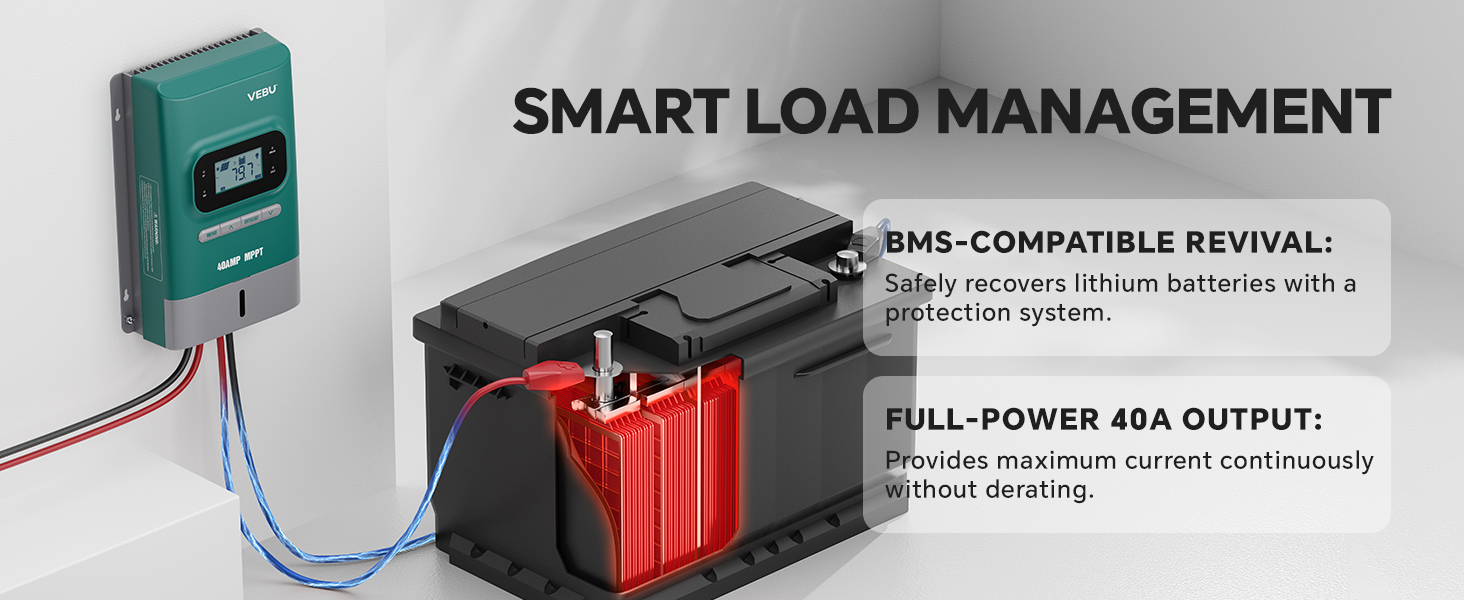
4-Stage Smart Charging for Battery Health & Revival: Intelligent Bulk, Absorption, Float, Equalization multi-stage charging optimizes life for Sealed, AGM, Gel, Flooded, and Lithium (LiFePO4) batteries. Includes a battery-revival function to help recover over-discharged LiFePO4 or lead-acid batteries
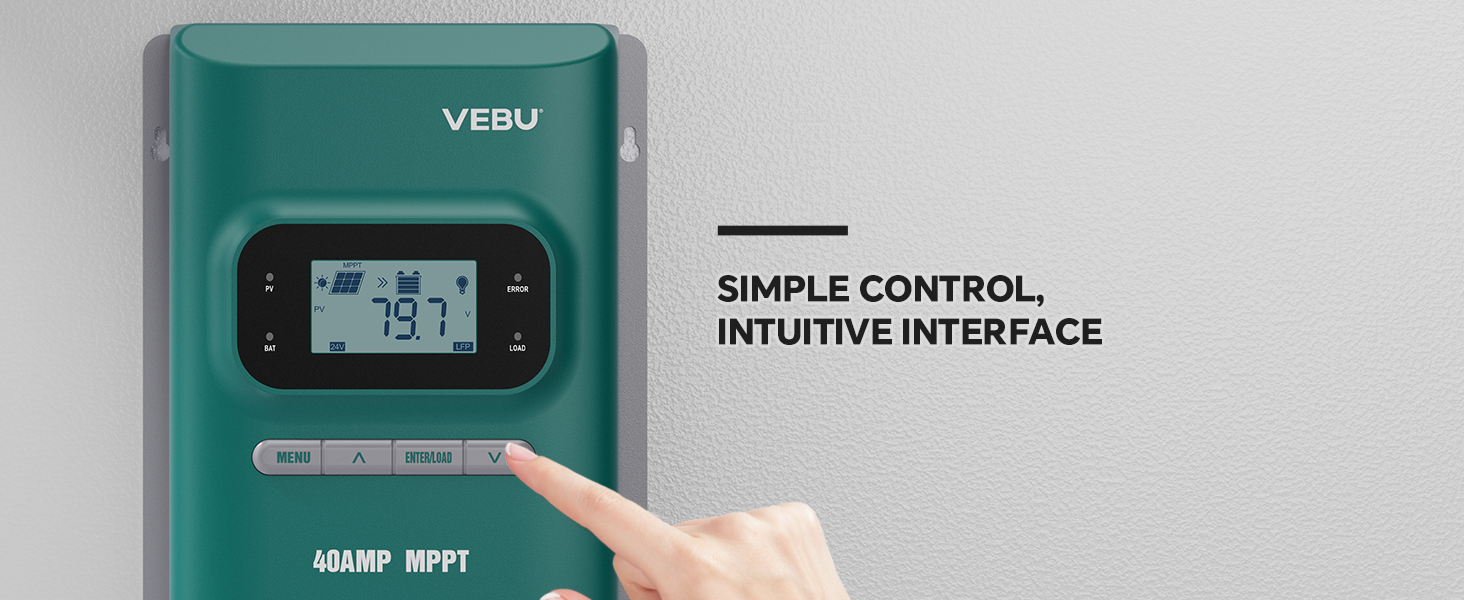
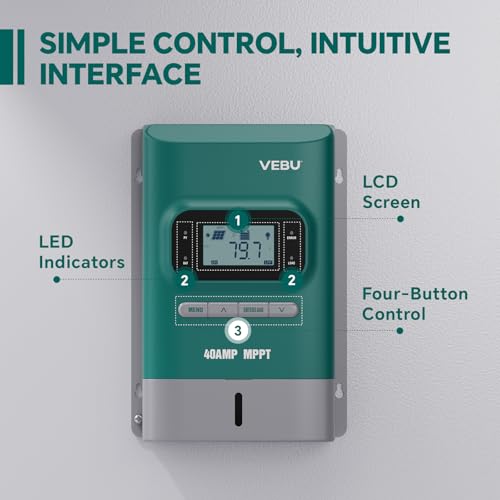
User-Friendly Backlit LCD for Real-Time Monitoring: The bright LCD and simple buttons interface display solar panel voltage, battery voltage, charging current, and real-time power. LED indicators and error codes provide quick system diagnostics—ideal for DIY off-grid setups
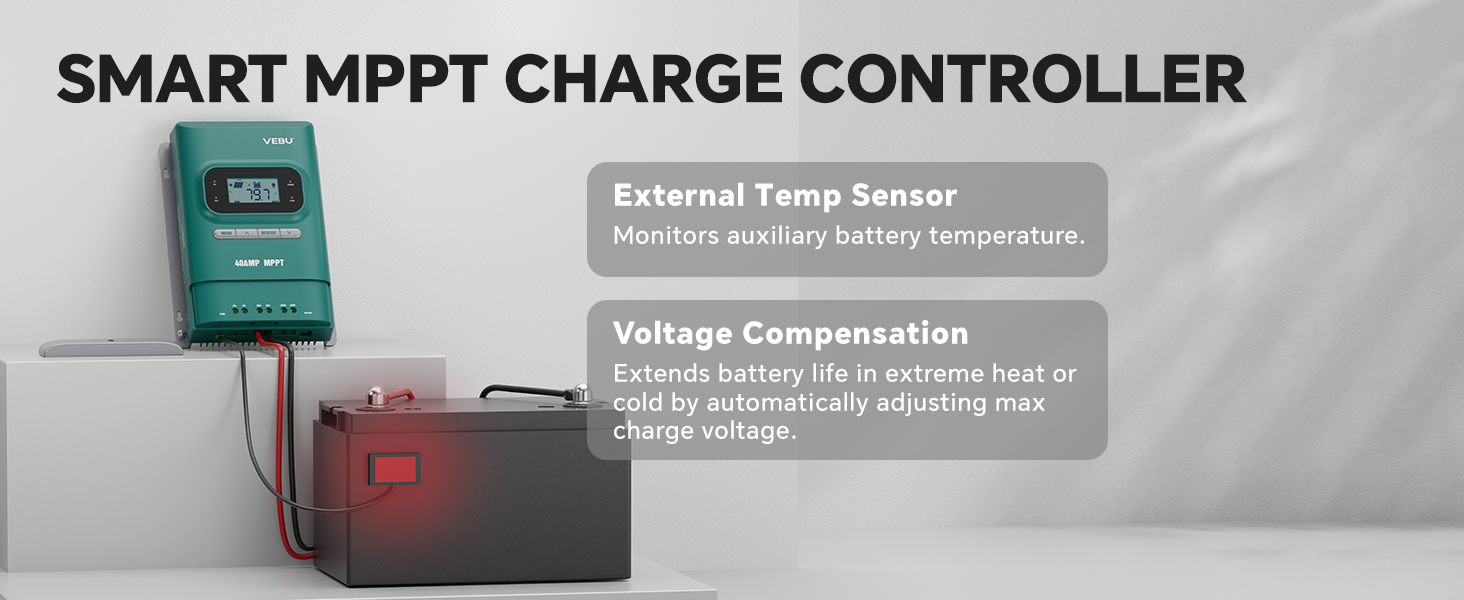
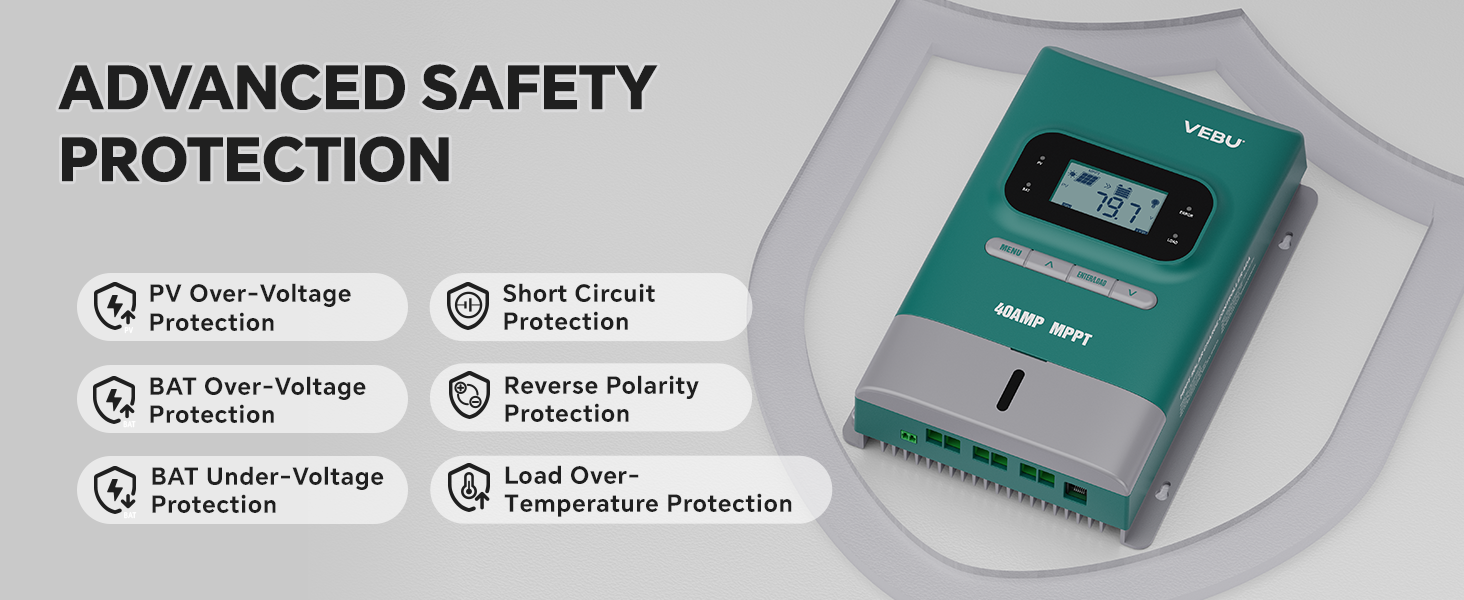
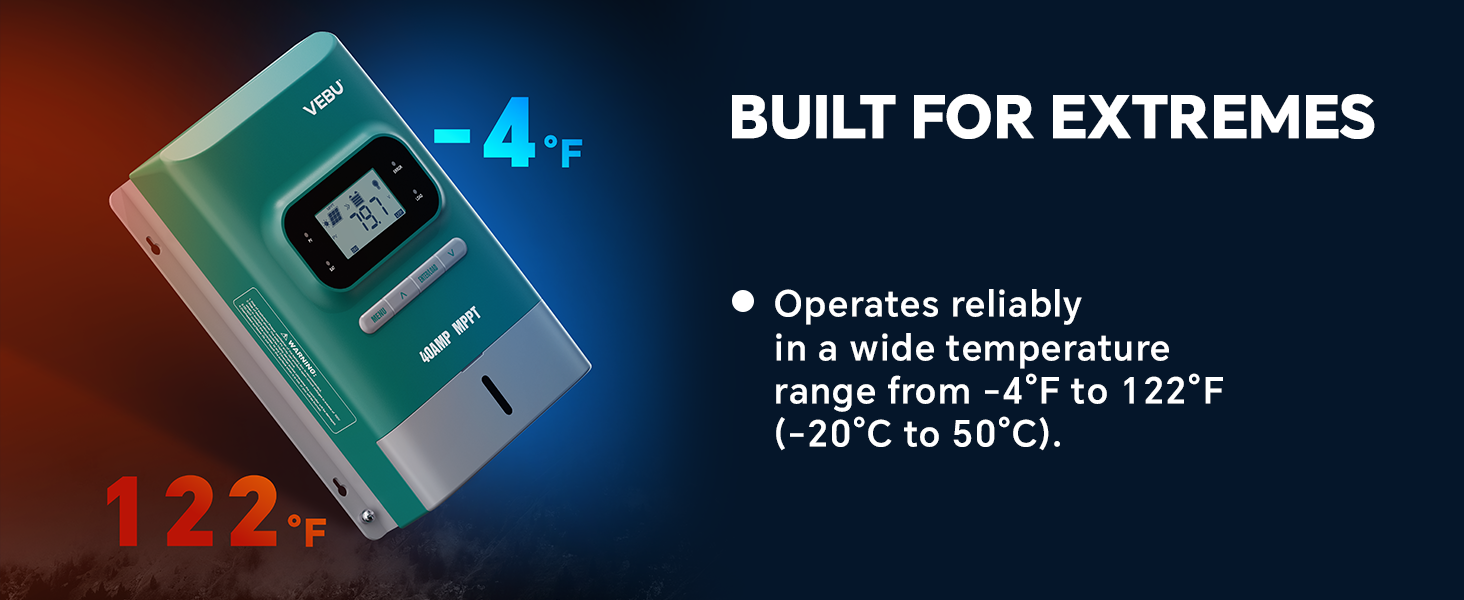
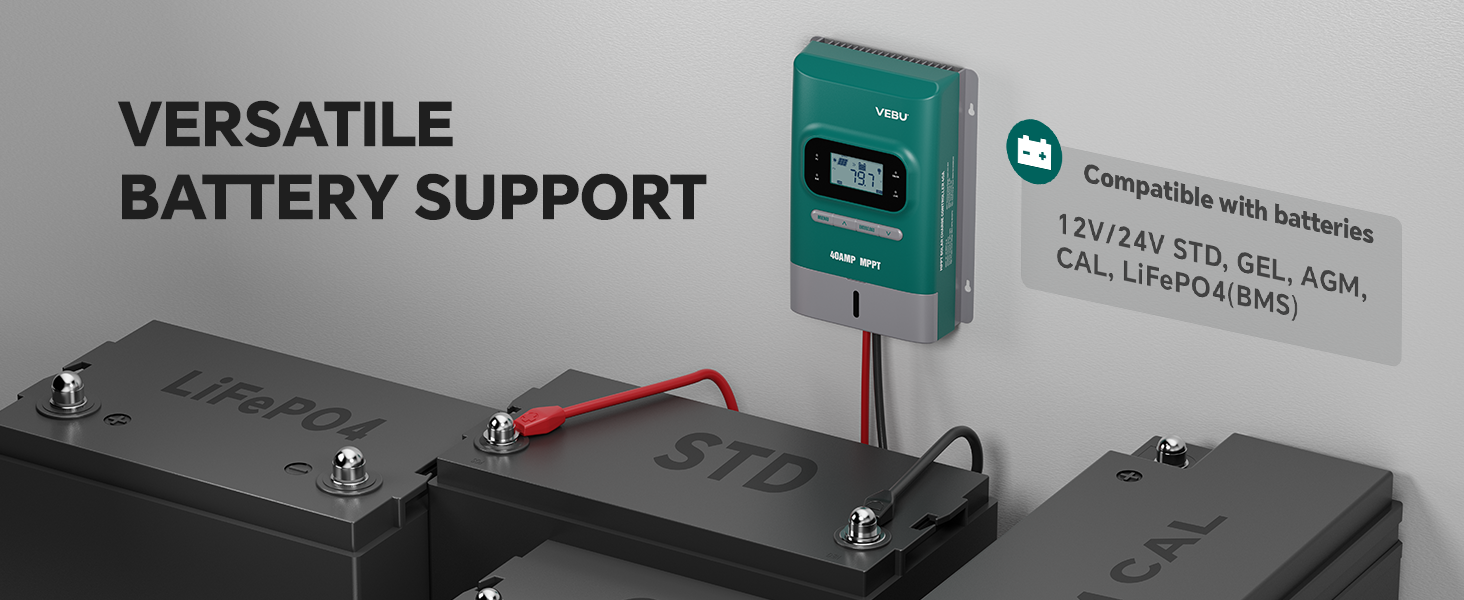
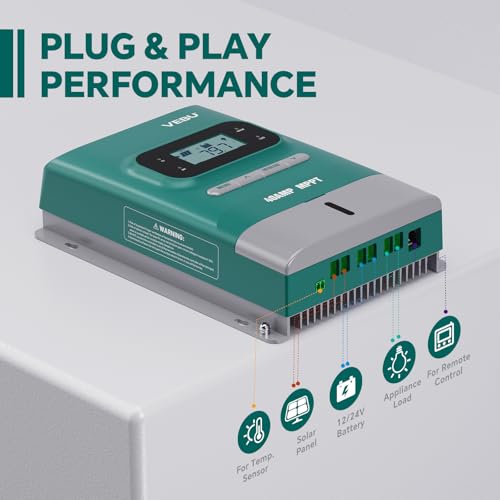
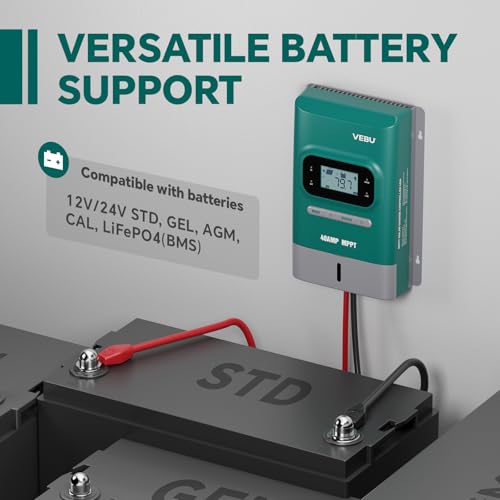
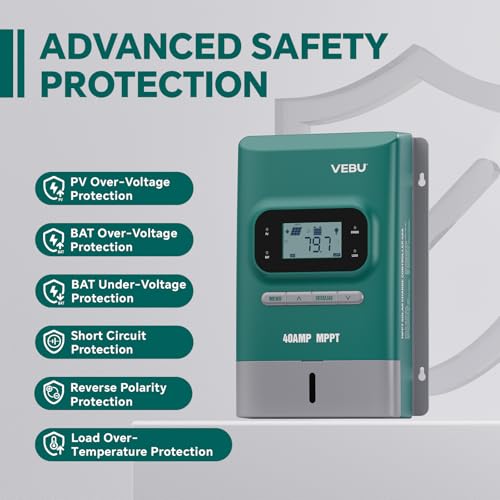
Wide Compatibility & Full System Protection: Automatically detects 12V/24V battery systems. Features full protection: reverse polarity, short circuit, over-voltage, under-voltage, and over-temperature protection (auto-shutdown) for safe use in RV, marine, and off-grid solar systems
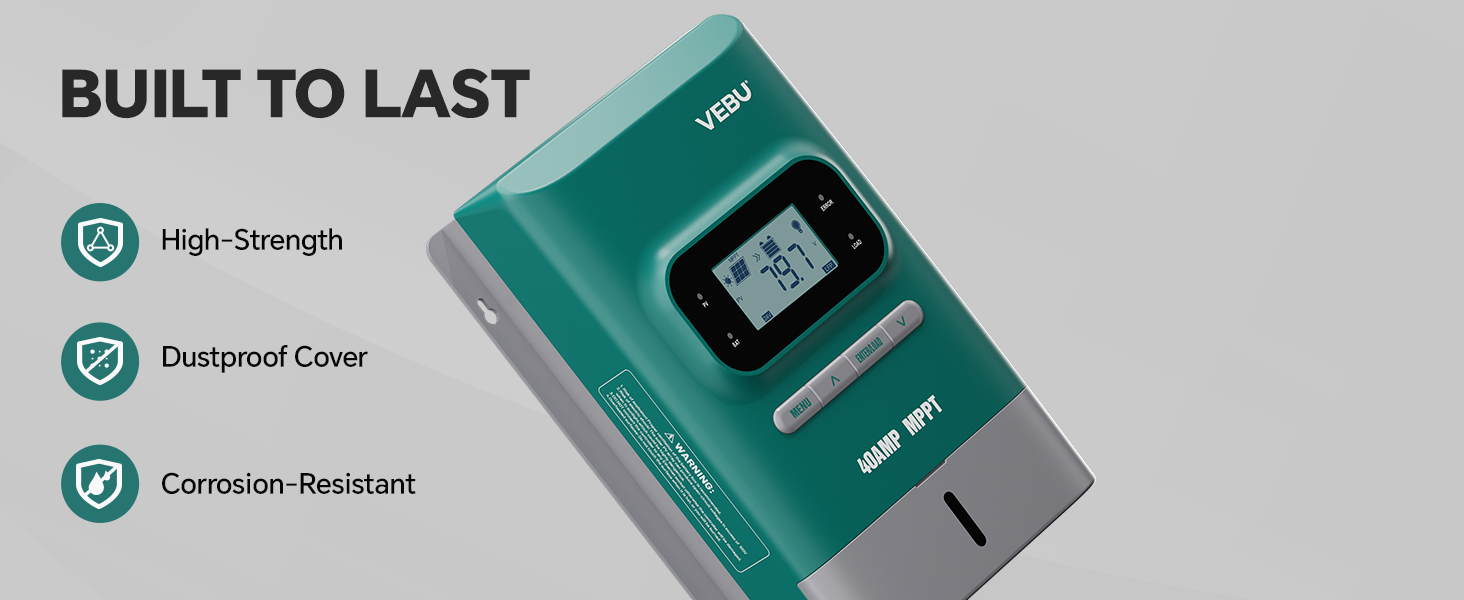
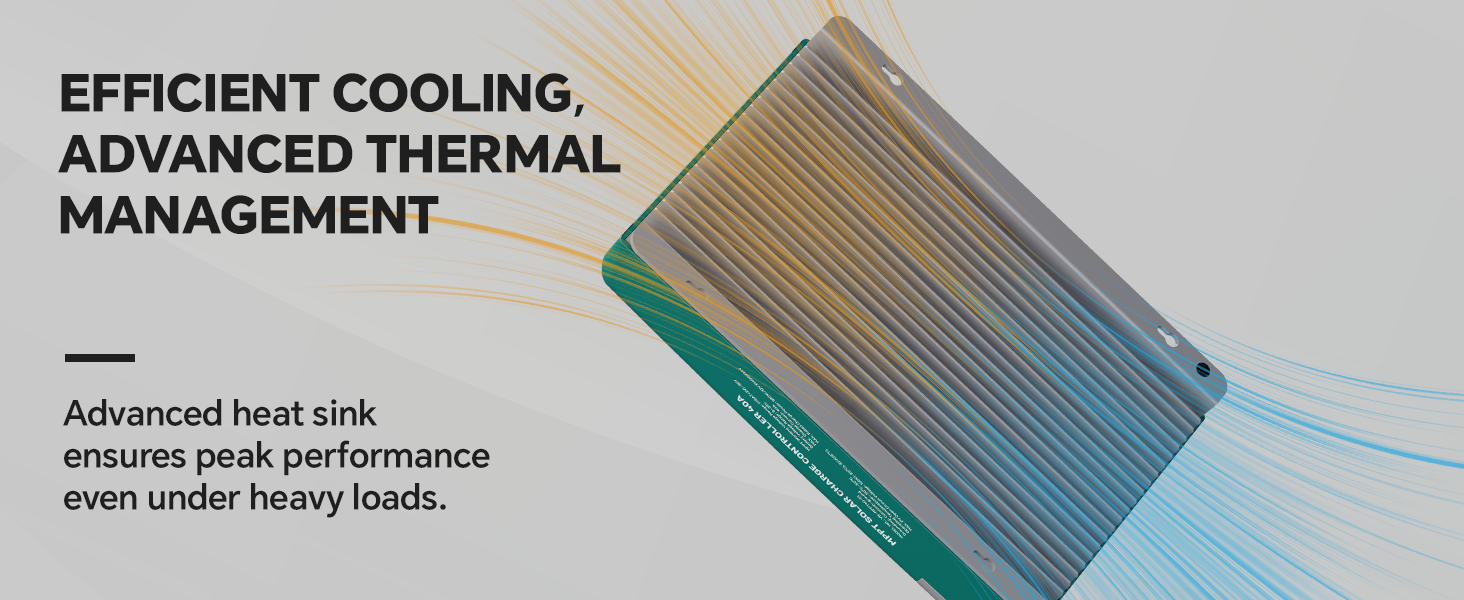
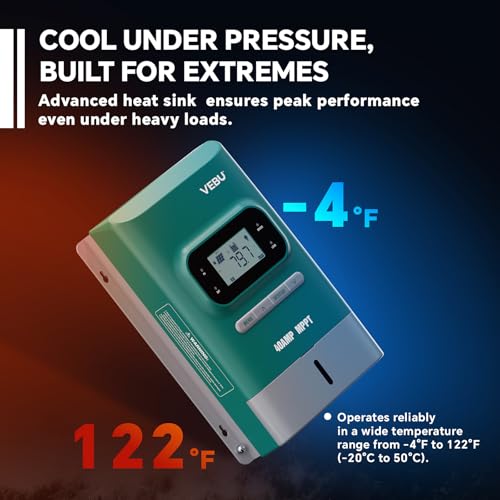
Robust Die-Cast Aluminum Housing for Tough Environments: The rugged die-cast aluminum base with integrated heat sink ensures stable 40A performance. Wall-mount design is perfect for RVs boats, cabins, and remote solar applications
Easy to set up and works great. We just started using this MPPT solar charge controller. It was a simple process to install it and it seems to be working great. It is easy to adjust the settings how we want them and I do believe we are now getting more power from our panels. This controller feels durable and well made. The connections were easy too. This controller has smart charging, which should help our batteries last much longer. The digital display is easy to see and understand. I would recommend this solar charger.
Works well with bank of two 12.8v LiFepo4 100Ah This MPPT is a great step up from a PWM charger. Works well with my 500W of solar. Can handle all battery chemistries like SLA, GEL, AGM, (LiFePO4). Clear instructions for install. I’m using it with my battery bank of two Wattcycle 12.8v LiFepo4 100Ah. Manages to keep them topped off while I’m intermittently running a a 4K BTU window unit, laptop, 12v cooler, and one power tool charger. Does well to recover my batteries from when I’ve run them completely flat from forgetfulness. This MPPT should survive years if properly installed and set up. Good unit to futureproof if you are planning to switching to 24V. I like that it has the flexibility of 12V or 24V, 500W on 12v, 1000w on 24v. I plan to expand my solar as well as battery bank eventually to 24V. I do wish it had bluetooth connectivity. For the price I wish it came with the remote control/monitor. Handles a large range of temperatures which can be useful for RVers or tiny cabins.
Solar Charging Made Simple This MPPT controller feels well-built, and the metal housing adds a reassuring, durable touch for RV or off-grid installs. The LCD is easy to read at a glance, showing the key stats you actually care about for monitoring and quick troubleshooting. Auto-detecting 12V/24V is convenient, and it settles into a steady charging routine without fuss. It’s a practical upgrade if you want a cleaner, more organized solar setup with clearer day-to-day visibility into what the system is doing.
It works great and consistently Just put this beauty into my off-grid system, and it does an awesome job!! Right now, I’m getting between 19-20 volts from solar panels to batteries and charging 39-40 amps when the sun is up. The batteries are being charged with a steady amount of energy, with no fluctuations at peak charge times, and everything stays steady once it gets locked onto the array. The output was very steady with no random drops in output. The enclosure feels great, and the terminals are solid.
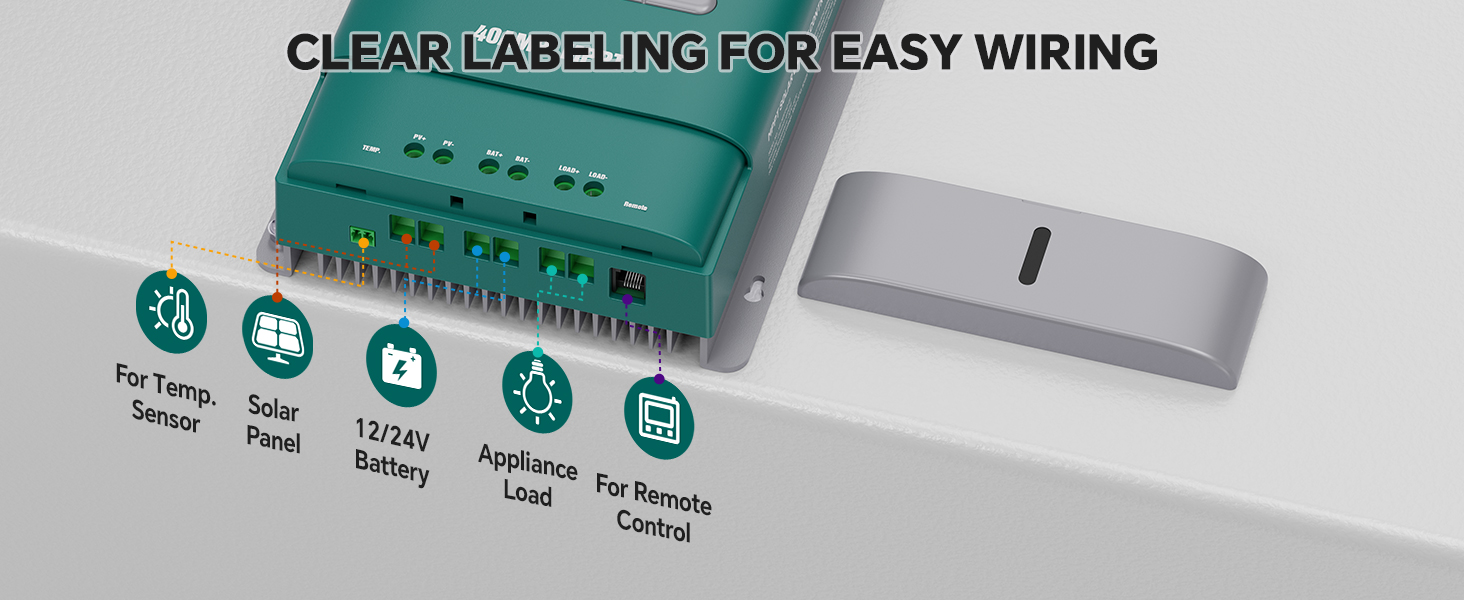
Robust Build Quality Marred by a Simple Labeling Oversigh Being an electrical engineer and a licensed ham radio operator, I have spent a significant amount of time working with various solar power components. Living in a hurricane-prone area of Florida, reliable off-grid power isn’t just a hobby; it is a necessity for emergency preparedness. Over the years, I have worked with a wide spectrum of solar panels, from small 10W units up to 300W panels, and this MPPT controller is one of the most impressively built pieces of hardware I have encountered. The die-cast aluminum housing and the substantial integrated heat sink on the back are excellent, providing the kind of thermal management you want when managing a 40A load. I primarily use this with LiFePo4 batteries, though it is versatile enough to handle most common chemistries. The backlit LCD is clear and provides essential real-time data on battery status and charging current. However, there is a baffling design choice that keeps this from being a perfect product: the ports are not labeled on the outside of the chassis. While the documentation is clear, the physical unit lacks any raised lettering or markings near the identical-looking ports for the solar panels, batteries, and load. For a permanent installation, this might be a minor inconvenience, but for portable ham radio operations where I am frequently connecting and disconnecting gear, it is a liability. Having to reference a manual every time to avoid damaging the system is a significant drawback. Furthermore, while the cost is higher than the budget controllers found elsewhere, the build quality justifies the price for those who prioritize reliability. It is a top-tier piece of equipment, but the lack of port labels is a surprising oversight in an otherwise well-engineered device.
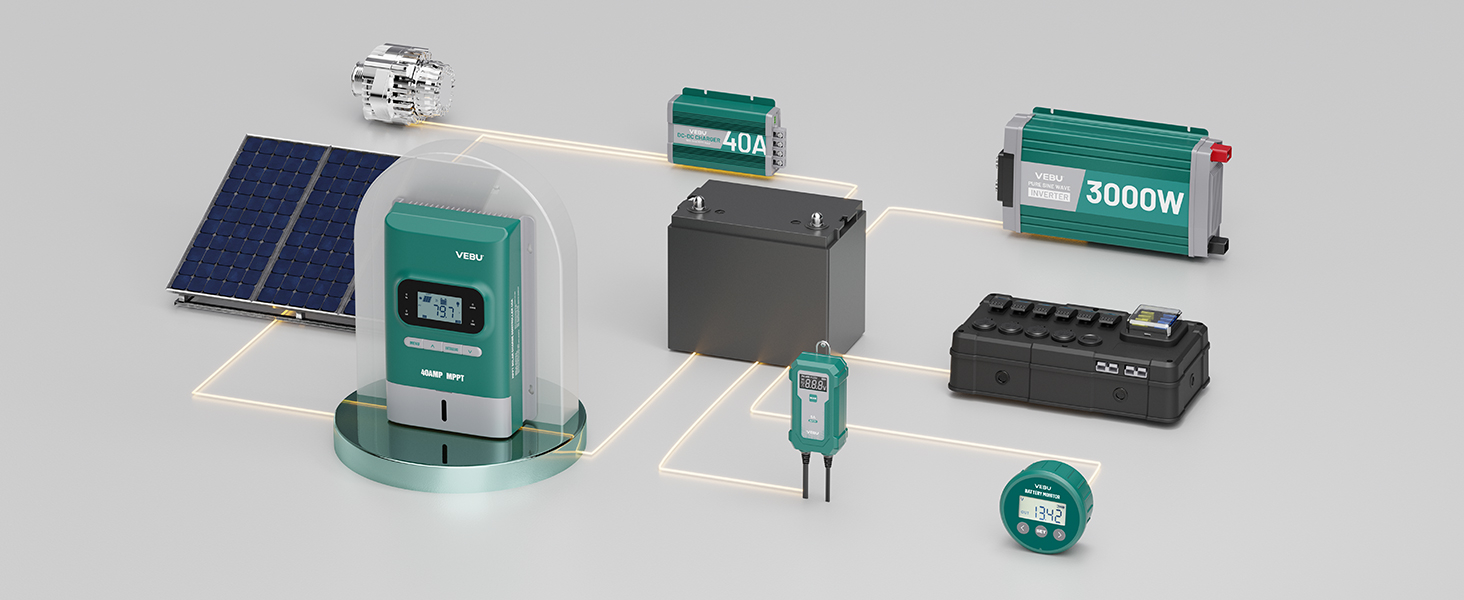 3000W Pure Sine Wave Inverter ” data-position=”triggerHorizontal” />MPPT Solar Charger Controller ” data-position=”triggerHorizontal” />
Easy to set up and works great.
We just started using this MPPT solar charge controller. It was a simple process to install it and it seems to be working great. It is easy to adjust the settings how we want them and I do believe we are now getting more power from our panels. This controller feels durable and well made. The connections were easy too. This controller has smart charging, which should help our batteries last much longer. The digital display is easy to see and understand. I would recommend this solar charger.
Works well with bank of two 12.8v LiFepo4 100Ah
This MPPT is a great step up from a PWM charger. Works well with my 500W of solar. Can handle all battery chemistries like SLA, GEL, AGM, (LiFePO4). Clear instructions for install. I’m using it with my battery bank of two Wattcycle 12.8v LiFepo4 100Ah. Manages to keep them topped off while I’m intermittently running a a 4K BTU window unit, laptop, 12v cooler, and one power tool charger. Does well to recover my batteries from when I’ve run them completely flat from forgetfulness. This MPPT should survive years if properly installed and set up. Good unit to futureproof if you are planning to switching to 24V. I like that it has the flexibility of 12V or 24V, 500W on 12v, 1000w on 24v. I plan to expand my solar as well as battery bank eventually to 24V. I do wish it had bluetooth connectivity. For the price I wish it came with the remote control/monitor. Handles a large range of temperatures which can be useful for RVers or tiny cabins.
Solar Charging Made Simple
This MPPT controller feels well-built, and the metal housing adds a reassuring, durable touch for RV or off-grid installs. The LCD is easy to read at a glance, showing the key stats you actually care about for monitoring and quick troubleshooting. Auto-detecting 12V/24V is convenient, and it settles into a steady charging routine without fuss. It’s a practical upgrade if you want a cleaner, more organized solar setup with clearer day-to-day visibility into what the system is doing.
It works great and consistently
Just put this beauty into my off-grid system, and it does an awesome job!! Right now, I’m getting between 19-20 volts from solar panels to batteries and charging 39-40 amps when the sun is up. The batteries are being charged with a steady amount of energy, with no fluctuations at peak charge times, and everything stays steady once it gets locked onto the array. The output was very steady with no random drops in output. The enclosure feels great, and the terminals are solid.
Robust Build Quality Marred by a Simple Labeling Oversigh
Being an electrical engineer and a licensed ham radio operator, I have spent a significant amount of time working with various solar power components. Living in a hurricane-prone area of Florida, reliable off-grid power isn’t just a hobby; it is a necessity for emergency preparedness. Over the years, I have worked with a wide spectrum of solar panels, from small 10W units up to 300W panels, and this MPPT controller is one of the most impressively built pieces of hardware I have encountered. The die-cast aluminum housing and the substantial integrated heat sink on the back are excellent, providing the kind of thermal management you want when managing a 40A load. I primarily use this with LiFePo4 batteries, though it is versatile enough to handle most common chemistries. The backlit LCD is clear and provides essential real-time data on battery status and charging current. However, there is a baffling design choice that keeps this from being a perfect product: the ports are not labeled on the outside of the chassis. While the documentation is clear, the physical unit lacks any raised lettering or markings near the identical-looking ports for the solar panels, batteries, and load. For a permanent installation, this might be a minor inconvenience, but for portable ham radio operations where I am frequently connecting and disconnecting gear, it is a liability. Having to reference a manual every time to avoid damaging the system is a significant drawback. Furthermore, while the cost is higher than the budget controllers found elsewhere, the build quality justifies the price for those who prioritize reliability. It is a top-tier piece of equipment, but the lack of port labels is a surprising oversight in an otherwise well-engineered device.